

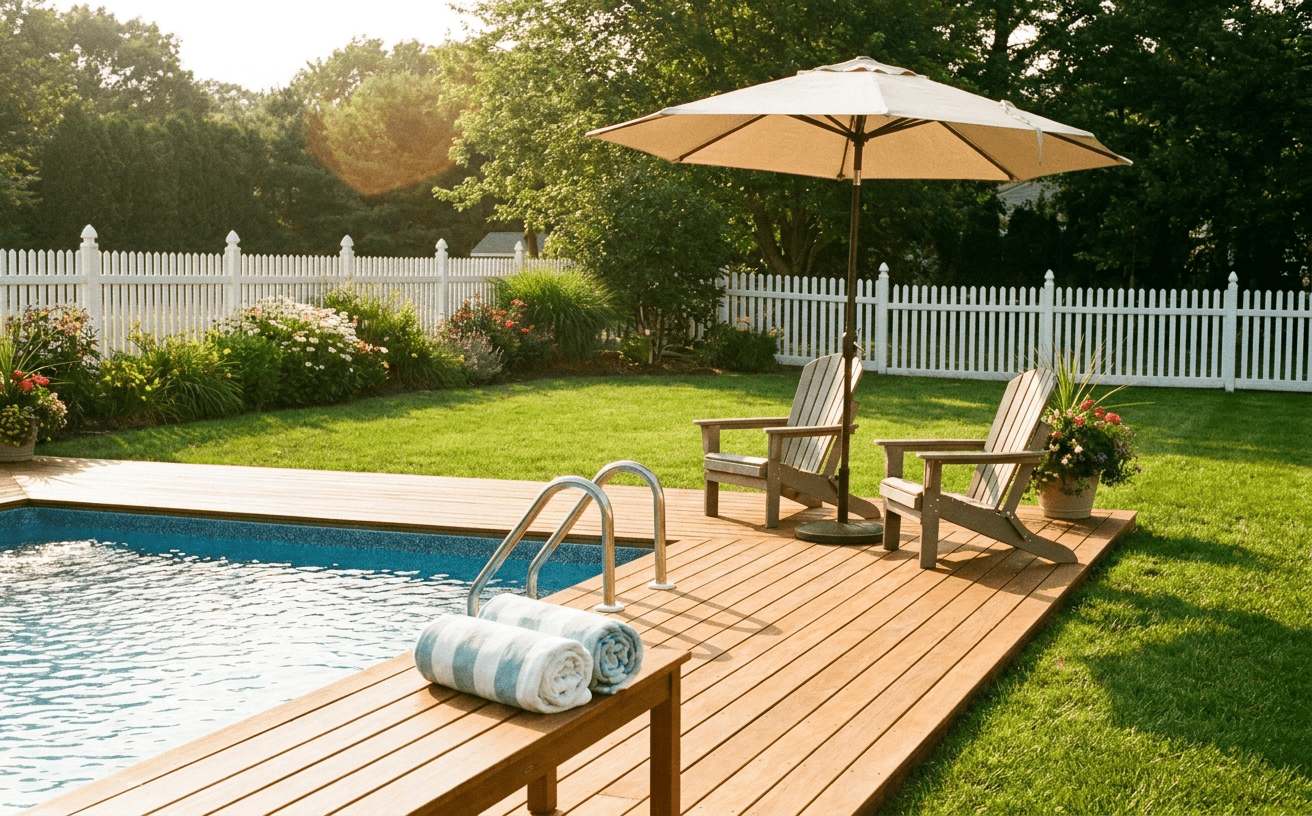
A pool day is a barefoot day. People step out of the water, walk across the deck, grab towels, move to the snack table, head to the bathroom, and return to the pool without thinking much about shoes.
That is part of the ease of summer.
But bare feet notice everything.
Hot pavers. rough concrete. tiny sticks. broken toy pieces. sharp mulch. wet leaves. slippery spots. pebbles from the lawn. a forgotten plastic snack wrapper. a towel bunched in the walking path.
A barefoot-friendly pool area is not only safer. It is more comfortable. It lets kids, adults, older relatives, and guests move around with less hesitation.
This kind of setup does not require a major renovation. It requires attention to the surfaces people actually touch with their feet.
Walk the Pool Route Barefoot
The best way to understand the barefoot experience is to walk it yourself.
Start at the back door. Walk to the pool steps. Walk from the pool to the towel area. Walk to the snack table. Walk to the bathroom path. Walk to the shaded chairs.
Notice what your feet feel.
Is the surface too hot? Is there grit? Are there small sticks near the lawn edge? Are toys in the way? Does one area feel slippery? Is there a mat that shifts underfoot?
This quick test reveals things your eyes may miss.
A patio can look clean while still feeling uncomfortable.
Bare feet are honest.
Handle Heat Before It Becomes a Complaint
In summer, pool decks can become hot fast. Concrete, stone, and darker surfaces may feel uncomfortable by midday.
If the surface gets too hot, create a plan.
Outdoor mats, shaded walkways, sandals near the door, and adjusted seating can help. You may also choose swim windows that avoid the hottest part of the day.
Children often run faster when the ground is hot, which can create safety issues. Older guests may feel unsteady if they are trying to move quickly across a hot deck.
A cooler walking path makes everyone calmer.
Comfort supports safety.
Keep the Entry Area Clear
The pool entry area gets heavy use. Steps, ladders, shallow-end edges, and nearby towel spots should stay clear of clutter.
Remove toys, sandals, goggles, cups, and loose towels from this zone.
People entering and exiting the pool are already adjusting to wet surfaces. They should not have to step around objects at the same time.
If kids tend to drop things near the steps, place a small bin nearby but outside the walking path.
The goal is to make the natural drop spot safer without turning it into a mess.
Watch for Tiny Debris
Bare feet are sensitive to small debris. A large branch is easy to see. A tiny wood chip is not. The same is true for bits of plastic, hard seed pods, dry leaves, gravel, and broken toy pieces.
Do a quick scan before busy pool use.
Look near the back door, pool steps, towel station, lawn edge, and patio table. These are the areas where people step most often.
A handheld broom or small outdoor brush can be useful for fast cleanup.
You do not need to clean the whole deck perfectly.
Focus on where feet go.
Build a Barefoot-Friendly Checklist
If your family uses the pool often, create a short barefoot checklist for summer days.
It might include:
- Check deck temperature.
- Clear pool entry area.
- Sweep main walking path.
- Move toys away from steps.
- Place towels within easy reach.
- Check for slippery leaves or wet mats.
- Keep sandals near the hot path.
Some homeowners may keep iGarden robotic pool cleaners in a broader pool planning note alongside other reminders that keep the water, deck, and family routines easier to manage during heavy-use months.
A checklist keeps comfort from depending on memory.
It also helps other family members participate.
Give Towels a Better Landing Spot
Towels often become the problem. People drop them near the steps, on the deck, across chairs, or in the walking path.
Create a better landing spot.
Use hooks, a towel rack, a bench, or a basket close to where people exit the pool. The spot should be easy to use while wet. If it is too far away, towels will not make it there.
Keep used towels separate from clean ones.
A towel on the ground is more than clutter. It can become slippery, dirty, or annoying to step over.
Towel placement is part of barefoot comfort.
Think About Grass-to-Deck Transitions
Many pool yards include both lawn and hardscape. That transition can create problems.
Grass carries moisture, soil, clippings, and small sticks onto the deck. Bare feet bring those things back toward the pool. Dogs and kids make the transfer faster.
Place a mat or rinse area between lawn and deck if needed.
You can also set a rule that wet swimmers stay on the patio and avoid the grass during active pool time.
This is not about protecting the lawn from fun. It is about keeping the walking surfaces comfortable and cleaner.
A clean transition reduces grit underfoot.
Keep Snack Areas Foot-Safe
Snack tables create crumbs, sticky drops, wrappers, and bottle caps. All of those can end up under bare feet.
Place snack areas away from the main walking route. Keep a trash bin nearby. Avoid glass. Pick up dropped food quickly.
This helps with ants and mess, but it also protects feet.
Nobody wants to step on a sticky fruit piece or a hard plastic cap after getting out of the pool.
A good snack setup supports the pool day without spreading across the deck.
Check Mats and Rugs
Outdoor mats can help, but they can also create problems if they slide, curl, or stay wet too long.
Check them regularly.
Do they grip the surface? Do edges curl up? Do they dry between uses? Do they collect dirt underneath? Are they placed where people naturally step?
A bad mat can be worse than no mat.
Use mats where they genuinely improve comfort and safety.
Remove the ones that become soggy, unstable, or dirty.
Make Older Guests Comfortable
Older guests may not say when a surface feels uncomfortable. They may simply avoid walking near the pool.
Think about their path.
Is there a stable chair close to shade? Is the bathroom route clear? Is the deck too hot? Are towels or shoes easy to reach? Is there a handrail where needed?
A barefoot-friendly pool day is not only for children.
Adults and older relatives also benefit from thoughtful surfaces and clear routes.
Comfort helps people feel included.
Teach Kids to Notice the Ground
Children often focus on the water and forget the ground. Teach them to notice.
Before swimming, ask them to help check for toys, sticks, and hot spots. Give them a simple job, like clearing goggles from the steps or putting pool toys in the bin.
This turns safety into participation.
It also helps kids understand that the pool area is a shared space.
They learn that what lands on the ground affects everyone.
End With a Path Reset
At the end of the day, reset the barefoot paths. This takes only a few minutes.
Pick up toys. remove towels. check for trash. sweep obvious debris. move sandals back to the door. hang mats if they need to dry.
This makes the next pool day easier.
It also prevents small objects from sitting overnight and becoming harder to spot.
A path reset is one of the simplest habits a pool family can keep.
Barefoot Comfort Changes the Whole Day
A pool day feels better when people can move naturally. No hopping across hot pavers. No stepping around toys. No sharp bits near the steps. No damp towels in the walkway. No gritty path from grass to water.
Barefoot comfort is not a luxury detail. It shapes how relaxed the whole backyard feels.
When the surfaces are cared for, people stop thinking about their feet and start enjoying the water, shade, snacks, and conversation.
That is the quiet success of a well-managed pool area.
The best pool days feel easy from the ground up.
Leave a Reply