

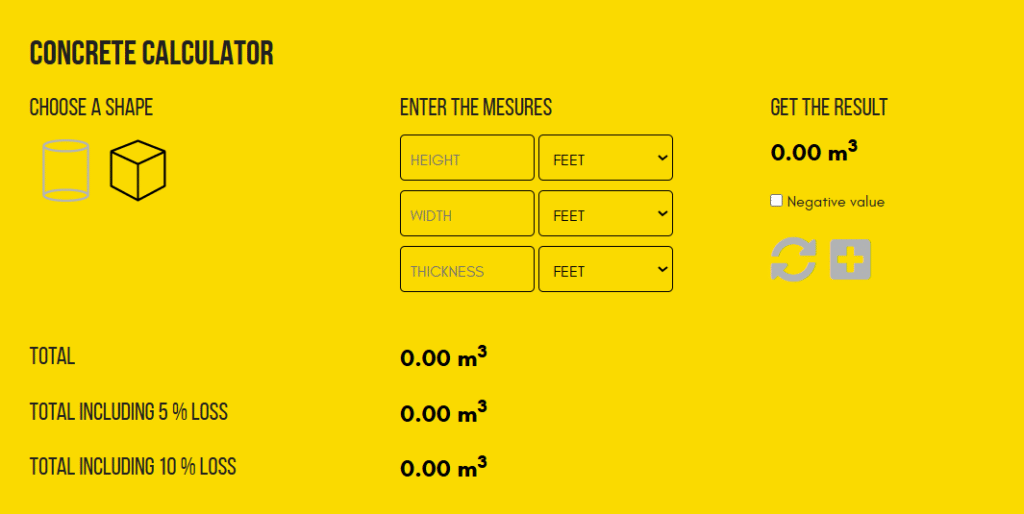
Are you planning to pour a brand new patio or build a sturdy driveway at home? Construction projects can feel overwhelming, but figuring out your materials does not have to be stressful. Knowing exactly how much material you need before buying saves you time, energy, and hard-earned cash. This is where a reliable concrete calculator comes in to make your life simple and hassle-free.
Using a concrete calculator allows you to quickly estimate the exact volume required for your project without guessing. Whether you are laying a simple backyard walkway or setting heavy fence posts, getting the math right on the first try prevents costly mistakes. In this complete guide, we will break down everything you need to know about measuring, calculating, and ordering materials with confidence and total peace of mind.
Table of Contents
Why You Need a Reliable Concrete Calculator for Your Home Projects
Starting any building project without clear measurements is like baking a cake without measuring your flour. If you order too little material, your work stops completely while you rush back to the hardware store. On the other hand, ordering too much leads to wasted money and messy piles of unused heavy mix in your yard. Using a concrete calculator eliminates all that guesswork instantly.
A good concrete calculator takes simple length, width, and depth measurements and turns them into precise cubic yards or cubic feet. This tool ensures you buy just the right amount of material to finish your job smoothly. By taking just a few minutes to calculate your needs beforehand, you protect your budget and enjoy a stress-free building experience from start to finish.
How Does a Concrete Calculator Work to Save You Time and Money?
Understanding how a concrete calculator works helps you plan your project much better. The underlying math relies on three basic dimensions: length, width, and thickness. The tool automatically multiplies these numbers together to find the total volume of space you need to fill, converting those figures into standard industry units like cubic yards or bag counts.
When you use a concrete calculator, you do not need to memorize complicated geometry formulas or unit conversions. The automated tool handles all the heavy lifting in seconds, giving you immediate confidence in your order. By preventing both over-ordering and under-ordering, this useful tool saves you extra delivery fees and keeps your project running strictly on schedule without unexpected delays.
Measuring Your Project Area Step by Step Like a Pro Builder
Getting accurate results from any concrete calculator depends on taking proper measurements at your project site. Grab a sturdy tape measure and measure the total length and width of your planned area in feet. Next, determine how thick or deep your slab needs to be, which is typically measured in inches for standard backyard patios, walkways, or footings.
Once you have your measurements ready, double-check every single number to ensure complete accuracy. Convert your thickness from inches into feet by dividing by twelve, or simply enter the raw numbers directly into a digital concrete calculator. Taking extra care during this measuring phase ensures your final material estimates match your real-world needs perfectly every time you build.
Complete Project Estimation and Material Breakdown Table
Planning your project requires knowing how different slab sizes translate into cubic yards and standard bag counts. Below is a helpful estimation table based on standard four-inch thick pour projects to give you a clear visual starting point for your next job.
| Project Size (Feet) | Thickness (Inches) | Total Volume (Cubic Yards) | 80-Pound Bags Needed | 60-Pound Bags Needed |
| 4 x 4 (Small Pad) | 4 | 0.20 | 9 Bags | 12 Bags |
| 10 x 10 (Small Patio) | 4 | # Meta Details |
Meta Title: Easy Concrete Calculator Guide: Estimate Your Project Needs Fast
Meta Description: Planning a DIY build or home project? Learn how a concrete calculator saves you time and money. Estimate slabs, footings, and steps with ease today.
Master Your Next DIY Build with a Concrete Calculator
Planning a home improvement project can feel super exciting, but figuring out materials often gets tricky. Whether you want to pour a new patio, build a sturdy driveway, or set up a small garden path, knowing exact material needs is the secret to success. If you guess the amount, you might end up with a messy half-finished project or a huge pile of wasted material that drains your wallet. That is where a smart tool comes into play. Learning how to use a concrete calculator gives you complete control over your budget and project timeline from day one.
Over the years, I have seen many enthusiastic homeowners start their outdoor builds with great energy, only to hit a wall when ordering supplies. Ordering too little means paying extra delivery fees for a second batch, while ordering too much leaves you with heavy waste to haul away. A reliable concrete calculator takes away all the stressful guessing games by doing the complex math for you in seconds. In this complete guide, we will explore simple methods to estimate your supplies accurately, choose the right mix types, save your hard-earned money, and ensure your next DIY building adventure goes smoothly without unexpected hiccups.
What Is a Concrete Calculator and Why Do You Need One?
A concrete calculator is a handy digital tool designed to help you estimate the exact volume of material required for any construction job. Instead of guessing or trying to remember geometry formulas from school, you simply type in your project measurements. The tool processes your length, width, and depth to show you how many cubic yards, cubic feet, or pre-mixed bags you need to purchase. Using a concrete calculator saves you precious time, helps you plan your budget accurately, and prevents costly mistakes before you spend a single dollar on supplies.
How Does a Concrete Calculator Work for Home Projects?
The basic math behind a concrete calculator relies on multiplying length by width by depth to find total volume. For example, if you measure a slab in feet and inches, the tool converts those numbers into cubic yards, which is how ready-mix suppliers sell their product. Using an online concrete calculator makes this process effortless because it instantly handles all unit conversions. You do not have to worry about making math errors, which gives you complete confidence when calling your local supplier or buying bagged mix at the store.
Simple Formulas Behind Your Measurement Calculations
While a concrete calculator does the heavy lifting, understanding the simple formula helps you double-check your numbers. To calculate volume for a standard rectangular slab, you multiply length by width by depth in feet, then divide by twenty-seven to get cubic yards. If you prefer to double-check manually before trusting a concrete calculator, remember that one cubic yard equals twenty-seven cubic feet. Knowing this basic equation gives you better control over your project and helps you speak like a pro when ordering materials from your local home improvement store.
Complete Project Estimation Table
Here is a handy reference chart to help you estimate common home projects. These numbers serve as a general guide before you run your exact dimensions through a digital tool.
| Project Type | Standard Dimensions | Volume in Cubic Feet | Volume in Cubic Yards | 80 lb Bags Needed |
| Small Garden Path | 10 ft x 3 ft x 4 in | 10 cu ft | 0.37 cu yds | 17 bags |
| Standard Patio | 12 ft x 12 ft x 4 in | 48 cu ft | 1.78 cu yds | 80 bags |
| Backyard Shed Base | 10 ft x 8 ft x 4 in | 26.6 cu ft | 0.98 cu yds | 45 bags |
| Two-Car Driveway | 20 ft x 20 ft x 4 in | 133.3 cu ft | 4.94 cu yds | 223 bags |
| Fence Post Holes (4) | 1 ft x 1 ft x 2 ft | 8 cu ft | 0.30 cu yds | 14 bags |
Measuring Rectangular Slabs for Patios and Driveways
Measuring a simple rectangular area like a patio, walkway, or driveway is the easiest task for any homeowner. First, take a tape measure and find the total length and width of your planned border in feet. Next, determine how thick your slab needs to be, which is usually four inches for walkways or six inches for heavy driveways. Enter these three dimensions into your concrete calculator to instantly find your total volume. Taking precise measurements ensures your new patio or driveway stays flat, strong, and beautiful for decades to come.
Estimating Volumes for Round Pillars and Post Holes
Calculating materials for round shapes like fence posts or structural pillars requires a slightly different approach than flat slabs. You need to measure the diameter across the top of the hole and the total depth from top to bottom. A specialized concrete calculator uses the radius and height to find the exact circular volume needed to fill the space. Inputting accurate hole dimensions into a concrete calculator prevents you from underfilling support posts, ensuring your fence or deck remains sturdy and safe against strong wind and rain.
Calculating Material Needs for Stairs and Steps
Measuring concrete for outdoor steps can feel tricky because each step acts like a small individual slab stacked on another. To get an accurate estimate, calculate each step separately by measuring its height, width, and depth, then add those numbers together. Alternatively, plug each set of step dimensions into a concrete calculator and sum up the results. Taking time to calculate multi-level steps with a concrete calculator ensures you do not run out of material midway through pouring your front stoop or garden staircase.
How to Calculate Bagged Mix Versus Ready-Mix Delivery
Deciding between buying individual bags or ordering a ready-mix truck depends on your total project size. Small jobs like setting post holes or making tiny walkways are perfect for pre-mixed bags from your local store. A standard concrete calculator often displays both cubic yards and the exact number of sixty-pound or eighty-pound bags required. If your project needs more than one cubic yard, using a concrete calculator will show you that ordering a ready-mix truck is much cheaper, easier, and less backbreaking than mixing dozens of heavy bags by hand.
The Importance of Adding a Safety Margin to Your Estimate
Even with exact measurements, real-world construction rarely goes perfectly according to plan. Ground surfaces are often slightly uneven, forms can flex under pressure, and some material always sticks to tools or spills over edges. That is why smart builders always add a ten percent safety buffer to their totals. When you check your results on a concrete calculator, simply multiply the final number by 1.10 to cover extra ground depth. Adding this small margin protects your project from coming up short right near the finish line.
Money-Saving Tips for Your Next Concrete Pour
Planning ahead is the single best way to keep your home improvement costs as low as possible. First, prepare your ground sub-base thoroughly so you do not waste expensive material filling deep uneven holes in the dirt. Second, double-check your total yardage on a concrete calculator before placing any orders with suppliers. Finally, compare prices between ordering pre-mixed bags and hiring a delivery truck for medium-sized jobs. Accurate calculations using a concrete calculator prevent overspending on excess materials that you cannot return once mixed.
Common Mistakes to Avoid When Estimating Materials
One major mistake people make is measuring depth in inches without converting it into feet before doing manual math. Another frequent error is forgetting that ground excavation creates loose soil, leading to deeper pours than originally planned. Using an online concrete calculator helps eliminate human math errors, but you must still provide accurate input measurements. Always double-check your tape measure numbers before running them through a concrete calculator, and remember to measure your formwork after it is fully built to catch any width or length changes.
Helpful FAQs About Concrete Project Planning
How many 80 lb bags make one cubic yard?
It takes eighty 80-pound bags of pre-mixed material to equal one full cubic yard. Checking a concrete calculator helps you quickly figure out how many bags to buy for smaller projects.
How thick should a standard DIY patio slab be?
A standard residential patio or walkway should be four inches thick. Heavy-duty surfaces like car driveways should be six inches deep for long-lasting strength.
Should I add extra material to my calculation?
Yes, you should always add five to ten percent extra material to your total estimate. This extra buffer accounts for uneven ground, spillage, and form flexing during the pour.
How long does freshly poured material take to dry?
It usually cures enough to walk on within twenty-four to forty-eight hours. However, it takes roughly twenty-eight days to reach its full structural strength.
Can I mix a full cubic yard by hand?
While possible, mixing a full cubic yard by hand requires eighty heavy bags and hours of hard physical labor. Hiring a mixer or ordering a delivery truck is much faster.
Why is my manual calculation different from the tool?
Manual errors often happen when converting depth inches into feet before multiplying. Relying on an updated concrete calculator ensures your unit conversions remain accurate every time.
Final Thoughts on Planning Your Project Success
Taking on a home building or repair project is immensely satisfying, but proper preparation makes all the difference between success and stress. By accurately measuring your space and putting those numbers into a trusted concrete calculator, you set your project up for smooth sailing. You will save money, work faster, and avoid the headache of running out of supplies mid-pour. Now that you know how to estimate your project like a seasoned expert, grab your tape measure, calculate your needs, and turn your home improvement ideas into reality today!
Leave a Reply